

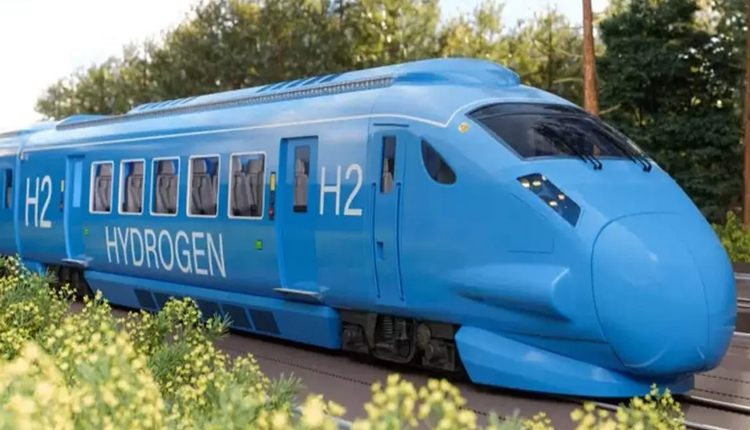
New Delhi: India recently witnessed a historic milestone in its transportation sector with the introduction of its very first hydrogen powered train. Unlike conventional electric locomotives that depend entirely on overhead wires to draw current, this modern vehicle is completely self reliant. It generates its own electricity on the move and marks a significant step forward in the technological evolution of Indian Railways.

The core technology driving this innovation is highly advanced. The train operates using specially designed internal power packs. Each individual pack contains a 115 kW fuel cell and a 185 kW battery. When working together these components safely generate an impressive 300 kW of power. The system holds 440 kilograms of hydrogen stored safely under high pressure. As the train operates, the fuel cell continuously combines this stored hydrogen with oxygen drawn naturally from the outside air. This specific chemical reaction instantly produces the electricity needed to run the engine.
Engineers have integrated a smart battery system to handle varying energy needs. The concept is very similar to riding a bicycle. A rider requires the maximum physical effort when starting to pedal or while climbing a steep incline, but needs much less energy once a steady speed is achieved. Similarly, the train requires a massive burst of energy to start moving and to accelerate rapidly. The internal battery steps in perfectly to provide this extra power surge during high demand phases.
Once the train reaches a steady cruising speed and the power demand drops, the fuel cell uses its extra generated energy to recharge the battery. Through this highly efficient regenerative cycle, the battery naturally recharges to about 80 percent capacity by the time the train reaches its destination.
To match the heavy hauling capabilities of traditional locomotives, this hydrogen model is equipped with a total of eight power packs. Together they produce 2400 kW of energy which is roughly equivalent to 3200 horsepower. This massive power output ensures that the new sustainable locomotive performs exactly on par with a normal electric train.
Comments are closed.