

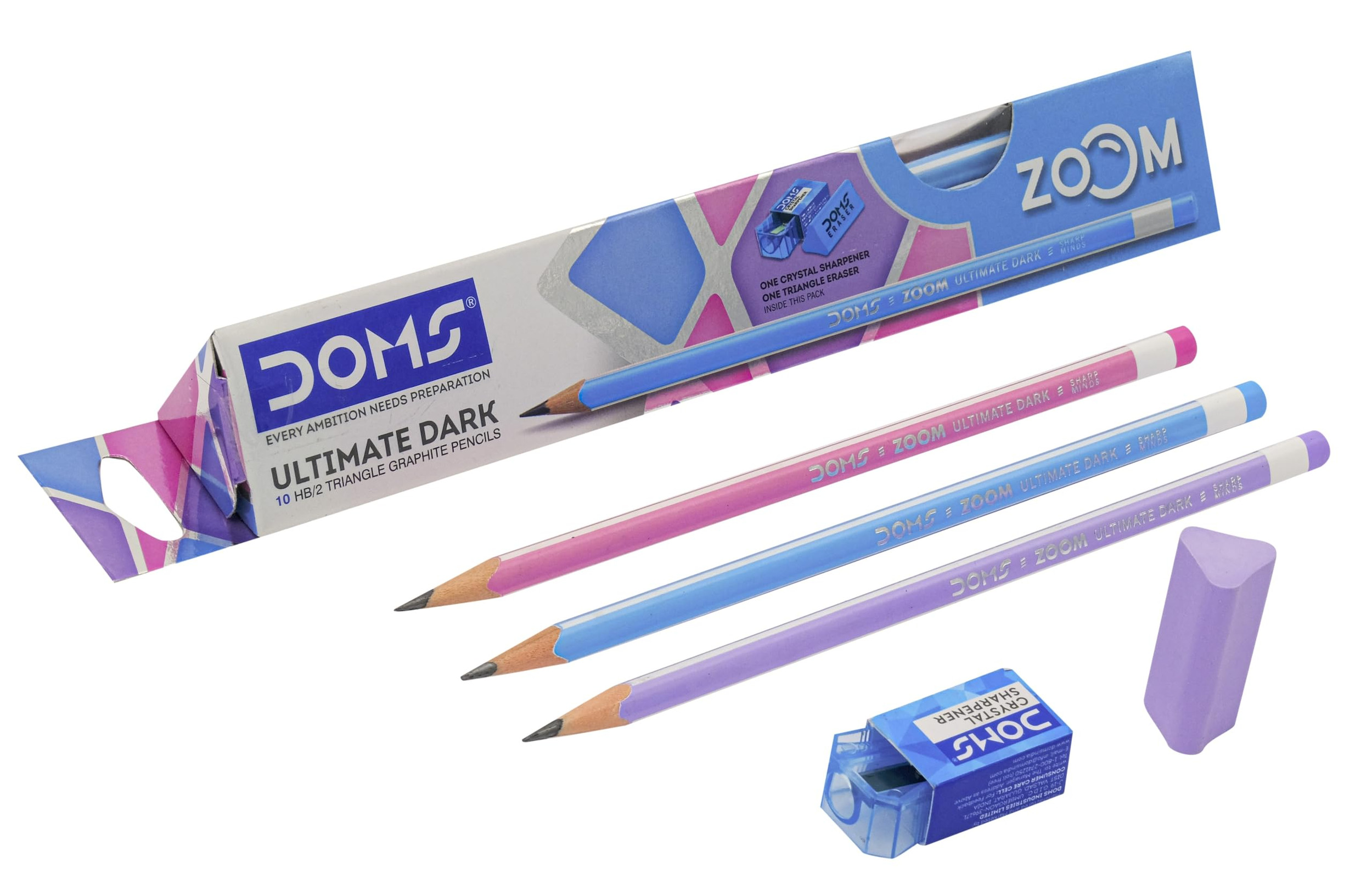
New Delhi: In the highly competitive world of Indian stationery, one brand has scripted an extraordinary success story by challenging established industry norms. Today, DOMS is recognised as one of India’s biggest and most profitable stationery brands, commanding a staggering market valuation of around ₹13,500 crore. However, this massive empire was built on a foundation of sudden adversity and a clever technological pivot inspired by Japan.

The modern journey of DOMS began with a profound personal loss. In 2002, the patriarch of the Raveshia family tragically passed away in a road accident. The immense responsibility of running the family’s 30-year-old manufacturing unit, RR Industries, suddenly fell upon the shoulders of his son, Santosh Raveshia, who was just 24 years old at the time.
As Santosh took the helm of the business, he closely observed a fundamental flaw in the Indian pencil market. During that era, legacy brands like Nataraj, Apsara, and Camlin dominated the industry. Almost every manufacturer was producing pencils the traditional way, relying on a standard mixture of graphite and clay. The common problem with these conventional pencils was their fragility; the lead would frequently snap if a student pressed a little too hard while writing.
Determined to find a more durable manufacturing method, Santosh researched global practices and came across an innovative technique pioneered by a Japanese company in the 1960s. Instead of using traditional clay, the Japanese method utilised a polymer binder that held the graphite particles together much more tightly. Recognising the immense potential of this technology for the Indian market, Santosh decided to adopt the idea.
In 2006, this vision culminated in the launch of the brand DOMS. The company introduced wooden pencils featuring this advanced polymer-based lead. The result was a pioneering product that was remarkably stronger, smoother to write with, and significantly harder to break.
However, Santosh did not stop at simply upgrading the internal lead. Understanding his primary consumers—school children—he introduced a triangular shape to the pencils, making them much more comfortable to grip for extended writing periods. Moving away from the monotonous red-and-black designs of the time, DOMS also rolled out their pencils in vibrant, multiple colours.
These thoughtful design changes paid off massively, quickly turning DOMS pencils into a veritable status symbol in classrooms across the country. By identifying a common consumer pain point and adapting a decades-old Japanese innovation, Santosh Raveshia successfully transformed a modest family factory into a ₹13,500 crore stationery behemoth that now dominates school bags across India.
Comments are closed.