

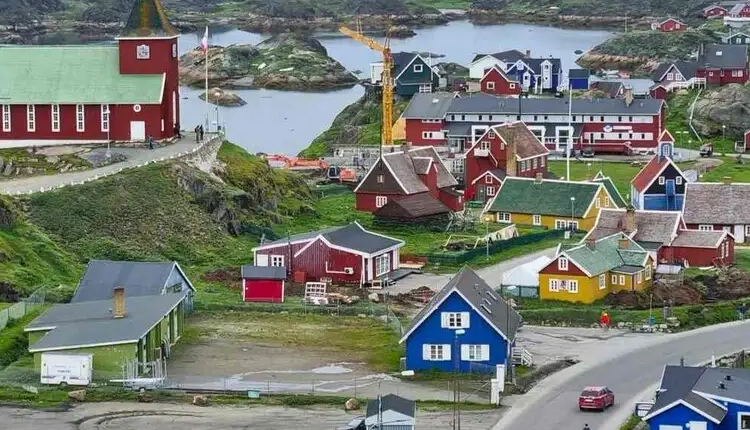
More than a millennium ago, a fiery Viking exile turned a frozen Arctic island into a beacon of promise through clever marketing.
Erik the Red, banished from Iceland around 982 AD for violent disputes and murders, sailed west in search of new lands. After exploring the southwestern coasts, he returned home and christened the icy territory Greenland — a deliberate name chosen to lure settlers by evoking lush, green valleys, even though vast ice sheets dominate the landscape.
His strategy worked. In 985 AD, Erik led a fleet of 25 ships carrying over 400 Norse pioneers from Iceland. Though only 14 vessels arrived safely, they established thriving settlements in the milder southern fjords, relying on farming, livestock, fishing, hunting, and trade in walrus ivory. These Norse communities flourished for centuries before gradually fading due to cooling climates, shifting trade routes, isolation, and interactions with indigenous Inuit populations, who adapted far better to the harsh environment.
Today, this vast island — the world’s largest, spanning over 2.1 million sq km with a population under 100,000 — finds itself back in the global spotlight. U.S. President Donald Trump has renewed his long-standing interest in acquiring Greenland, framing it as vital for national security. He has warned that if the U.S. doesn’t act, Russia or China will and has even supported congressional bills to potentially make it a U.S. state.
The strategic allure? Greenland ranks eighth globally in rare earth mineral reserves, holding an estimated 1.5 million tonnes, including massive untapped deposits like Kvanefjeld and Tanbreez— critical for defence technology, renewables, and electronics. Yet no large-scale mining has begun, hampered by extreme conditions and infrastructure challenges.
Greenland’s five political parties have firmly responded: “We don’t want to be Americans; we don’t want to be Danish; we want to be Greenlanders.” As Trump eyes this Arctic prize amid rising geopolitical tensions, the island’s ancient name — born of Viking ambition — now echoes in modern power plays.
Comments are closed.