

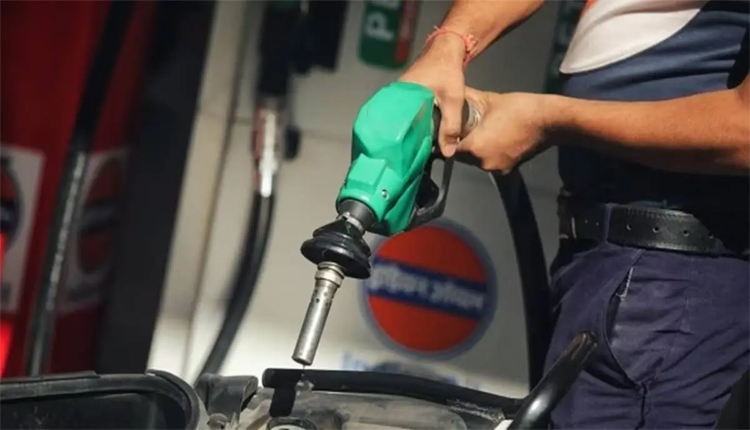
New Delhi: Following a surge in complaints regarding vehicle engine breakdowns caused by adulterated E20 petrol, the Union Petroleum Ministry and Oil Marketing Companies (OMCs) have launched a massive nationwide quality-control drive. As a result, fuel sales have been suspended with immediate effect at more than 2,500 retail outlets across the country for failing to meet prescribed purity standards.

The strict regulatory action has primarily impacted retail outlets belonging to three major public sector oil companies. According to official data, sales have been halted at 1,257 Indian Oil Corporation (IOCL) pumps, 915 Hindustan Petroleum (HPCL) outlets, and 401 Bharat Petroleum (BPCL) stations. Investigating agencies and OMCs have clarified that sales will not resume at these locations until the purity of the fuel is completely verified.
The controversy over E20 fuel—petrol blended with 20% ethanol—escalated when major automobile manufacturers, including Maruti Suzuki, Tata Motors, and Mahindra, raised alarms over widespread damage to vehicle fuel systems. Investigations revealed that petrol at several locations contained chloride and moisture levels far exceeding permissible limits. The problem was further aggravated during the monsoon season, as groundwater seeped into underground storage tanks.
This toxic mix of water and chemical impurities was severely damaging expensive engine components, including fuel injectors and pumps. With automakers facing a sudden spike in warranty claims and angry customers reporting sudden drops in mileage and engine jerking, the auto industry associations formally requested government intervention.
To eliminate the adulteration and water-ingress issues permanently, the petroleum ministry has introduced stringent new protocols. At nearly 89,000 petrol pumps nationwide, underground storage tanks must now undergo water-ingress tests 8 to 12 times a day. Additionally, automated monitoring systems have been installed at over 85,000 retail outlets. These advanced systems are designed to detect even minor moisture content and will automatically halt the fuel supply if impurities are found, ensuring that contaminated petrol does not reach consumer vehicles.
Comments are closed.