

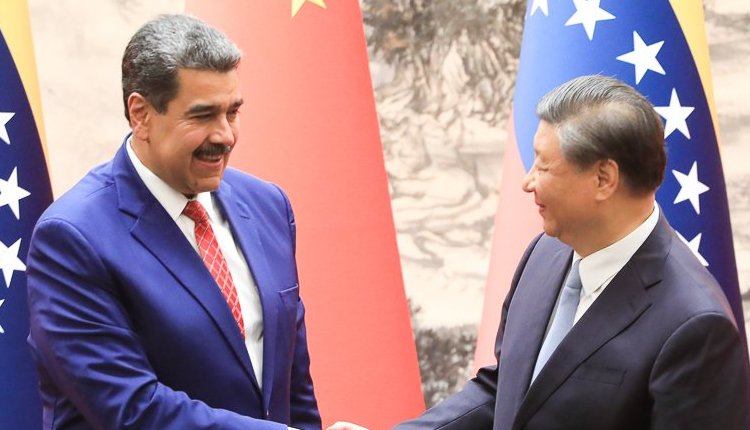
Beijing: As the world reels from the dramatic US military strikes on Venezuela and the capture of President Nicolás Maduro, attention turns to Caracas’ steadfast partner: China.
The two nations’ relationship, elevated to an “all-weather strategic partnership” in 2023, has weathered economic crises, sanctions and geopolitical storms, rooted in mutual needs for energy and diplomatic support.
Diplomatic ties date back to 1974, when Venezuela recognised the People’s Republic of China; but the real deepening began in 1999 under President Hugo Chávez. Seeking alternatives to US influence, Chávez visited China frequently, forging a strategic partnership in 2001 – the first with a Hispanic nation.
Economic cooperation boomed through an oil-for-loans model. From a modest trade of $742 million in 2003, it soared to $20 billion by 2012. China extended around $60 billion in loans, the largest to any country, including a $20 billion deal in 2010. Joint funds and ventures in oil extraction followed, with Chinese firms playing key roles.
Military ties grew too, with China supplying $615 million in weapons over a decade and training Venezuelan personnel. During the COVID-19 pandemic, Beijing sent medical aid.
In September 2023, Presidents Xi Jinping and Maduro upgraded ties to “all-weather” status, signing 31 agreements amid over 790 total pacts. Today, China buys 76–80% of Venezuela’s oil exports, sustaining the economy despite US sanctions.
This resilient alliance, built on oil, loans and an anti-hegemony stance, now faces its toughest test post the US intervention. China has condemned the strikes as “hegemonic acts,” underscoring the partnership’s enduring strengths.
Comments are closed.