

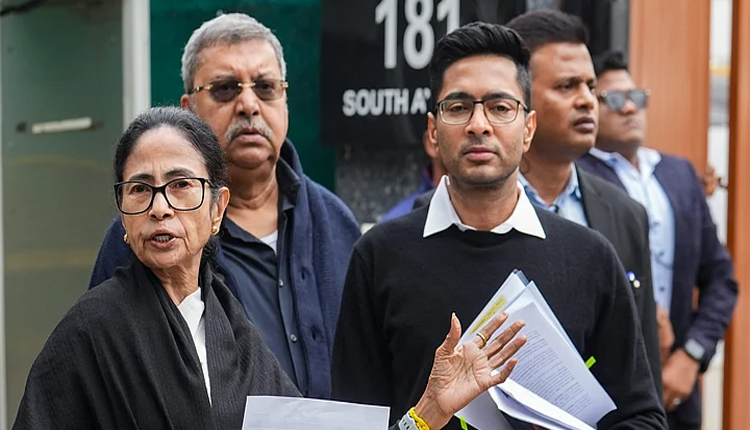
New Delhi: In a historic moment for India’s judiciary, West Bengal Chief Minister Mamata Banerjee stepped into the Supreme Court not just as a leader, but as an advocate, marking the first time a sitting chief minister has argued a case before the apex court.
Dressed in her signature style, Banerjee passionately pleaded for justice in a matter concerning alleged irregularities in the state’s voter lists, urging the bench to “save democracy.”
The hearing unfolded on Wednesday, with Banerjee seated among lawyers, highlighting grievances over the Election Commission’s handling of voter deletions. She claimed that justice had been elusive, with repeated appeals to the poll body going unanswered. “I come from a humble background and am fighting for my party,” she told the court, pointing out issues like married daughters being removed from electoral rolls due to address changes, spelling discrepancies, and language barriers. Banerjee accused the Commission of violating court directives and questioned why Bengal was being singled out while states like Assam escaped scrutiny. She also noted the deaths of several booth-level officers amid the controversy.
Chief Justice of India D Y Chandrachud, leading the bench, responded with poise, acknowledging her concerns. “You have chosen excellent counsel; let them argue,” he advised, but granted her 15 minutes instead of the requested five. “Every problem has a solution, and we’ll find one here,” the CJI assured, noting that the state government and her party were well-represented by senior advocates like Kapil Sibbal. The court affirmed the validity of the issues raised, emphasising no one should be disenfranchised over minor errors.
This unprecedented appearance underscores Banerjee’s hands-on approach amid escalating political tensions ahead of elections. While former chief ministers have appeared in court, none argued as an incumbent. The episode has sparked debates on democratic safeguards and judicial access.
Comments are closed.