

Amid escalating geopolitical tensions from the Russia-Ukraine conflict, India has strategically pivoted to sourcing affordable energy from Russia, leveraging its vast refining capabilities to export refined petroleum products back to Europe.
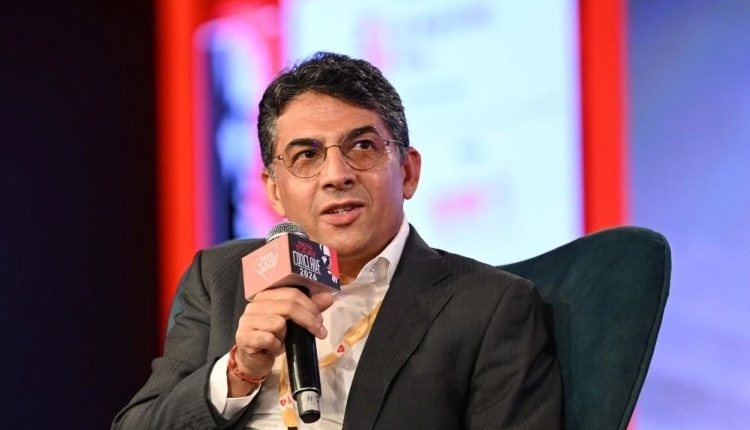
Speaking at the India Today Conclave, Arvind Tiku, the founder of AT Capital, emphasised the need for adaptive energy policies in a volatile global landscape.
“Geopolitical tensions have triggered an energy crisis, requiring us to revamp our strategies,” Tiku said. “We must strengthen ties with all nations, not rely on one, and adapt to situations. India is handling this situation admirably.”
Tiku highlighted India’s proactive approach: from importing 1 to 1.5 million barrels of Russian oil daily in February, the country surged to 30 million barrels in a single day following a US waiver. Though purchases dipped recently, they have resumed under limited US approval. Addressing concerns over potential US pressure halting imports, Tiku asserted, “For an energy import-dependent nation like India, the focus is on how cheaply we get oil and energy, not the source. Russian oil plays a pivotal role in the global supply chain — you can’t simply remove it from the market.”
He noted that pre-war, India avoided Russian oil, but post-conflict discounts prompted imports. With one of the world’s largest refining capacities, India refines cheap crude and exports to Europe. Tiku praised India’s diplomatic finesse in balancing diverse sources based on price, ensuring energy security.
On economic growth, Tiku pointed out India’s $4.5 trillion economy with per capita GDP under $3,000, holding immense expansion potential: “Doubling it to $6,000 would make us a $9 trillion powerhouse.” Despite the global shift to renewables, he predicted that fossil fuels like oil and gas would dominate India’s energy mix for another 30–40 years.
Comments are closed.