

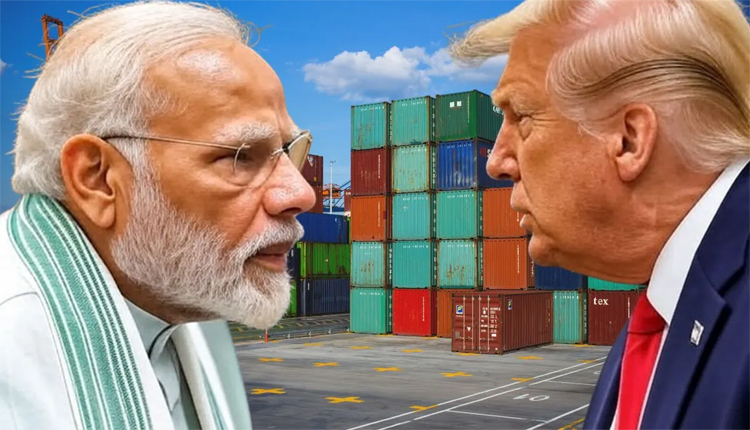
New Delhi: The United States administration under President Donald Trump has proposed steep import tariffs on goods from 14 major trading partners, including India, following the conclusion of an eight-month Section 301 investigation into alleged global excess manufacturing capacity. Under the new proposal unveiled by the Office of the United States Trade Representative (USTR), Indian exports face punitive levies of up to 25 percent. However, the proposal incorporates a crucial conditional clause that could cap the duty at 17 percent if New Delhi and Washington successfully seal their pending Bilateral Trade Agreement (BTA).

The two-tier tariff structure is part of Washington’s renewed trade offensive after the US Supreme Court struck down earlier reciprocal tariffs imposed under emergency economic powers. Under the revised framework, countries that finalise trade arrangements receive preferential rates. While India faces a 25 percent baseline levy without a deal, an early pact would lower the tariff to 17 percent—offering Indian exporters a modest competitive advantage over regional peers such as Bangladesh, Cambodia, Indonesia, Malaysia, and Thailand, all of which face proposed deal rates of 18 percent, as well as China and Vietnam at 20 percent. In another significant reprieve for domestic industry, India’s top export drivers—pharmaceuticals and mobile handsets—have been excluded from the additional duties.
The USTR probe claimed that industrial subsidies, market distortions, and initiatives like the Production Linked Incentive (PLI) scheme under the ‘Aatmanirbhar Bharat’ mission foster surplus domestic production in sectors such as solar modules, steel, textiles, petrochemicals, and information technology hardware. US Trade Representative Jamieson Greer argued that such government support policies distort global market parity and undermine American manufacturing output and jobs.
New Delhi strongly rejected Washington’s allegations regarding excess industrial capacity. The Union Commerce Ministry stated that the government is carefully examining the USTR notice and underscored that bilateral trade concerns should be resolved through dialogue rather than unilateral levies. “It has been India’s position that any trade-related concerns should be addressed within the framework of these negotiations. Government of India remains committed to working closely with the United States towards the early conclusion of the India-US Bilateral Trade Agreement,” the ministry noted.
The proposed duties are not scheduled to take effect immediately. The USTR has invited public comments until 5 January and scheduled formal public hearings for 25 January, paving the way for potential implementation by February.