

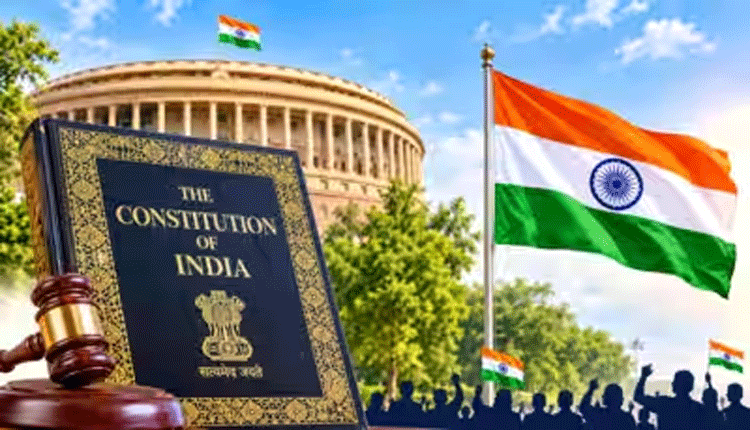
New Delhi: As India observes Constitution Day, the historic debates of the Constituent Assembly offer a compelling reminder of the pioneering vision of its female members. Out of the 299 delegates who framed the founding document over nearly three years, only 15 were women. Ten of them actively took the floor during the deliberations, contributing over 66,000 recorded words. Notably, these leaders did not seek special accommodations or reserved legislative seats; instead, they demanded unconditional equality, justice, and a level playing field based on merit.

Leading the charge against separate electorates, Hansa Mehta unequivocally stated that women did not want reserved seats, but rather complete social, economic, and political justice. Mehta, who presented the national flag to the Assembly on behalf of the women of India on 14 August 1947, insisted that true empowerment lay in constitutional parity rather than patronage. Aligning with this view on 18 July 1947, Renuka Ray argued that earmarked seats would diminish the perceived abilities of women, pointing to Vijaya Lakshmi Pandit’s merit-based appointment as India’s Ambassador to the United States as evidence of what women could achieve through open competition.
The assembly debates also saw incisive interventions on broader civil rights. Dakshayani Velayudhan, the sole Dalit woman in the Assembly, passionately supported the abolition of untouchability while warning that constitutional provisions alone would not transform society unless citizens genuinely changed their conduct. Durgabai Deshmukh emerged as the most prolific female voice, speaking over 22,000 words and advocating relentlessly for effective legal remedies to enforce fundamental rights. Meanwhile, Begum Aizaz Rasul, the only Muslim woman member, firmly opposed separate electorates for religious minorities, arguing that shared voter rolls were essential for national unity.
Over the subsequent seven decades, however, real-world political representation fell far short of the founders’ egalitarian ideals. The persistent deficit in legislatures eventually prompted Parliament to pass the 106th Constitutional Amendment Act, known as the Nari Shakti Vandan Adhiniyam, reserving one-third of seats for women in the Lok Sabha and state assemblies. While formal quotas have now been embraced as an affirmative necessity, the core question raised by the founding mothers remains relevant: how quickly Indian society can translate constitutional guarantees into substantive day-to-day equality.