

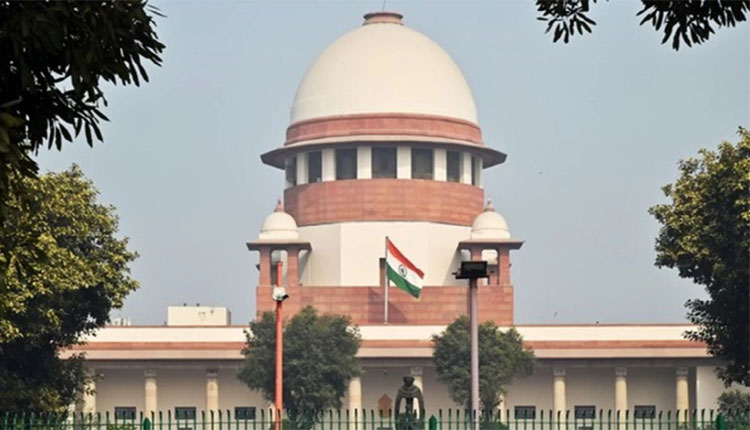
New Delhi: The Supreme Court of India has witnessed an unprecedented surge in litigation in the aftermath of the Covid-19 pandemic, with annual case filings more than doubling from around 35,000 to over 80,000 cases every year, Justice M.M. Sundresh observed on Thursday.

The senior judge voiced serious concern over the mounting administrative strain this deluge has placed on the apex court’s machinery, pointing out that the sheer volume of fresh and miscellaneous matters is severely curtailing the time available to conduct final hearings in older, long-pending disputes.
Justice Sundresh made these observations while presiding over a division bench alongside Justice P.B. Varale. The remarks came in response to an advocate who mentioned a matter listed lower down on the day’s cause list, expressing apprehension that it might not be taken up and requesting an accommodation since he was unavailable the following day. Acceding to the request, the bench accommodated the lawyer while shedding light on the immense scheduling hurdles the registry is currently navigating.
Addressing the courtroom, Justice Sundresh explained that prior to the pandemic, the apex court typically registered between 35,000 and 36,000 fresh petitions annually. However, following the pandemic, that figure has crossed 80,000 per year, marking a dramatic spike that has strained institutional bandwidth.
The judge explained that the influx of fresh petitions demands extensive procedural scrutiny, admission-stage hearings, and listing arrangements, which consume a substantial share of the court’s working hours. As a direct consequence, matters awaiting final adjudication and definitive judgments are being delayed.
Highlighting the operational strain on the administrative wing, Justice Sundresh noted that the Supreme Court Registry is finding it increasingly difficult to cope with the sheer volume of fresh paperwork. “The registry is unable to manage miscellaneous matters. Because of this problem, we are unable to take up final hearing matters. We are trying to manage,” the judge observed.
The remarks underscore a wider challenge confronting the Indian higher judiciary, where the dual imperatives of entertaining urgent citizens’ grievances at the threshold and clearing decades-old appeals continue to test court capacity.