

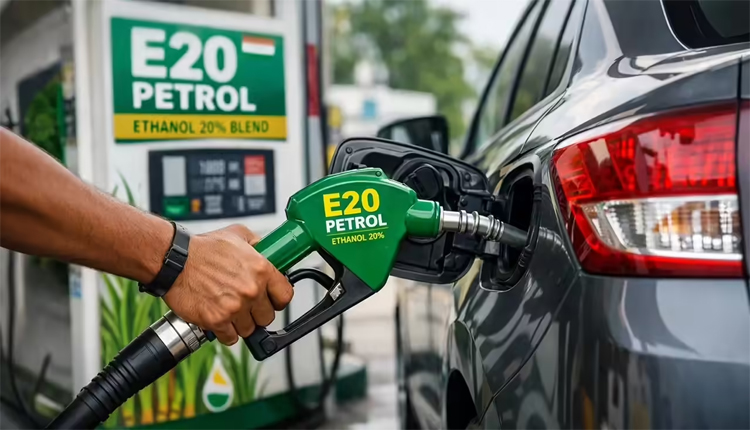
New Delhi: The controversy surrounding E20 petrol continues to escalate across southern India. Following explosive claims by the Karnataka government that petrol samples collected from several districts contained over 31 per cent ethanol—well beyond the mandated 20 per cent limit—the Kerala government has now ordered similar quality inspections.

Responding to a surge in consumer complaints regarding reduced vehicle mileage and engine performance, state authorities in Kerala have collected motor spirit samples from four districts to verify the exact ethanol blending ratios. While the ruling party at the Centre has dismissed the scrutiny by the Congress-ruled states as politically motivated, the dispute has sparked widespread public curiosity regarding fuel quality checks.
What Is E20 Petrol?
The Indian government has approved the widespread sale of E20 petrol, which signifies a blend of 20 per cent ethanol and 80 per cent standard petrol. According to official guidelines maintained by the government and public sector oil companies, a slight variation in the blending ratio, specifically between 19 and 21 per cent, is permissible and fully compliant. Any laboratory reading within this bracket confirms that the fuel is up to the prescribed standard.
How To Test Ethanol Content
While formal grievances require authorised laboratory testing, RP Singh, a retired senior official from the Indian Oil Corporation, notes that consumers can perform a rudimentary check at home. The process involves taking a transparent, empty glass bottle and filling 10 per cent of it with water. The remaining 90 per cent is then filled with the suspect E20 petrol. Once the bottle is tightly closed and left undisturbed on a flat surface, the ethanol will naturally separate from the petrol, mix with the water, and settle at the bottom. If the bottom liquid layer noticeably exceeds the original 10 per cent water mark, it strongly indicates a higher concentration of ethanol.
However, Singh cautions that this DIY method is not legally admissible in consumer disputes and poses significant safety risks due to the highly flammable nature of petrol.
For a safer and more scientific alternative, the Bhabha Atomic Research Centre (BARC) has developed a rapid, colour-based visual detection kit. Although not yet widely available for general public purchase, this innovative kit reacts chemically with the petrol to generate a specific colour. This colour is then matched against a standard chart, delivering accurate results within minutes without the need for complex laboratory equipment.
Consumers suspecting fuel irregularities are advised to first contact the petrol pump manager or the respective oil company to demand an immediate quality check. For formal legal recourse, complaints can be escalated to the state’s Food, Civil Supplies, or Legal Metrology departments, which mandate that samples be collected, securely sealed, and tested under stringent procedural guidelines at authorised laboratories.