

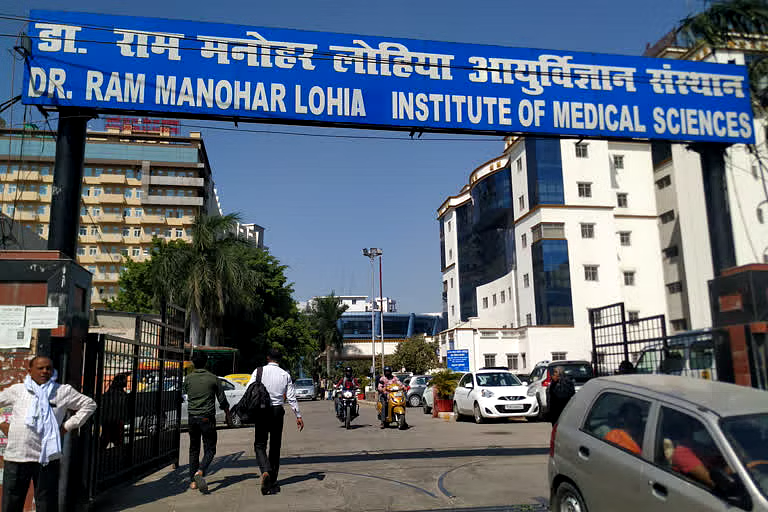
New Delhi: In a major medical breakthrough for government healthcare facilities, the Ram Manohar Lohia (RML) Hospital in New Delhi successfully conducted its first-ever Deep Brain Stimulation (DBS) surgery. Colloquially known as implanting a ‘brain pacemaker’, this highly advanced functional neurosurgery was performed on a 55-year-old Parkinson’s patient, offering her a new lease of life.

The patient, a government official hailing from Nepal, had been battling severe symptoms of Parkinson’s disease for a prolonged period. The progressive neurological disorder had drastically restricted her mobility and caused intense tremors in her hands, eventually forcing her to take a six-month leave of absence from her official duties. Following the successful intervention, medical authorities have confirmed that the patient is currently under observation and her condition remains stable.
The intricate surgical procedure, which lasted for nearly eight and a half hours, was spearheaded by Dr Sharad Pandey, Head of the Neurosurgery Department at RML Hospital. Shedding light on the operation, Dr Pandey stated, “This surgery is highly complex and requires extreme precision. The procedure commenced at 9:00 AM and concluded at approximately 5:30 PM. It was a collaborative institutional effort that saw crucial support from specialists in the anaesthesia and radiology departments.”
Deep Brain Stimulation is an ultra-modern surgical treatment where ultra-thin electrodes are carefully implanted into targeted areas of the brain responsible for controlling motor functions. These electrodes are connected to a neurostimulator—a battery-operated pulse generator akin to a cardiac pacemaker—which is surgically placed under the skin near the chest or abdomen. This device sends controlled electrical impulses directly to the brain, regulating abnormal activities and significantly curbing tremors.
One of the most remarkable aspects of this achievement is the cost-effectiveness. Medical experts point out that a DBS surgery in a premium private hospital can easily cost anywhere between ₹25 lakh to ₹30 lakh. However, by introducing this complex procedure at a government-run institution like RML Hospital, the treatment has been rendered accessible at a fraction of the cost.
Post-surgery, patients experience a massive reduction in their dependency on heavy doses of Parkinson’s medications, with visible and sustained improvements typically manifesting within one to six months.