

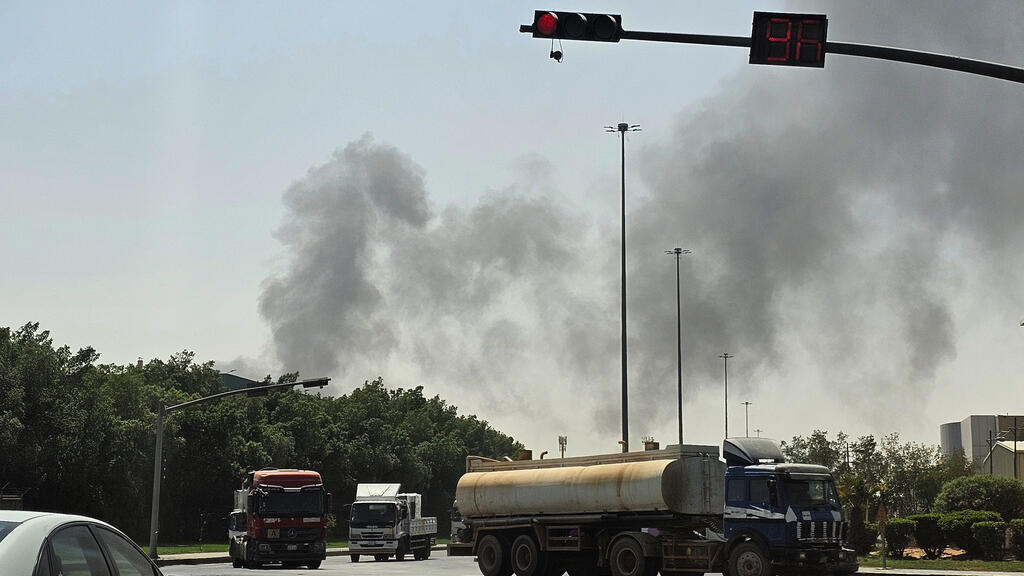
New Delhi: The conflict in the Middle East has sharply escalated following consecutive devastating attacks by Houthi rebels on the King Khalid International Airport in Riyadh, the capital of Saudi Arabia. A devastating strike on October 10 claimed the lives of 12 people and left 309 injured. Just a day later, on October 11, a second attack targeted Terminal-4 of the same airport, resulting in a massive fire that killed one person and injured 11 more. The victims included citizens from Saudi Arabia, Bangladesh, the United States, Jordan, Palestine, Syria, Sudan, and Egypt.

With the Houthis threatening further assaults on Saudi infrastructure, the global spotlight has turned to the United States. Observers are closely watching to see whether Washington will directly intervene, bolster Saudi defenses, or rely on diplomatic and economic pressure. United States President Donald Trump is currently evaluating three primary options to address this escalating crisis.
1. Direct Military Strikes on Houthis
The first option before the Trump administration is to launch direct military strikes against Houthi strongholds in Yemen, in coordination with Saudi Arabia. While President Trump has stated he is considering this route, no final decision has been announced. The US has a precedent of direct action; under ‘Operation Rough Rider,’ which ran from March to April 2025, American forces targeted over 800 Houthi command centers and missile caches. However, despite the sheer scale of the operation, it failed to completely neutralize the Houthis’ offensive capabilities.
2. Bolstering Saudi Arabia’s Defenses
Instead of entering a direct war, the US might opt to enhance Saudi Arabia’s defensive grid. This involves sharing critical intelligence, providing early warnings for drone and missile attacks, and strengthening air defense systems. According to an October 11 report by The Washington Post, while the US was actively providing intelligence support to Saudi Arabia, it had stopped short of direct military intervention. This strategy mitigates the risk of a wider war but does not guarantee the complete safety of Saudi airports and oil facilities.
3. Diplomatic Pressure and Squeezing Iran
The third strategic avenue relies heavily on diplomacy and economic strangulation. Both Washington and Riyadh consider the Houthis an Iran-backed proxy. In March 2025, the US Treasury Department imposed severe sanctions on several senior Houthi members for arms smuggling. The US could intensify pressure on Iran to choke off the supply of weapons and funds to the rebels. Alternatively, back-channel negotiations via neutral intermediaries like Oman could be revived. In May 2025, Oman successfully brokered a temporary ceasefire between the US and Houthi officials in Sanaa.
The stakes in this conflict extend far beyond the borders of Yemen and Saudi Arabia. Continuous strikes threaten the Bab-al-Mandeb Strait, a vital maritime chokepoint connecting the Red Sea to the Gulf of Aden. Any disruption here could force global shipping to take longer, more expensive routes, severely impacting international trade. As the situation remains highly volatile, the international community waits to see which path the US will choose.