

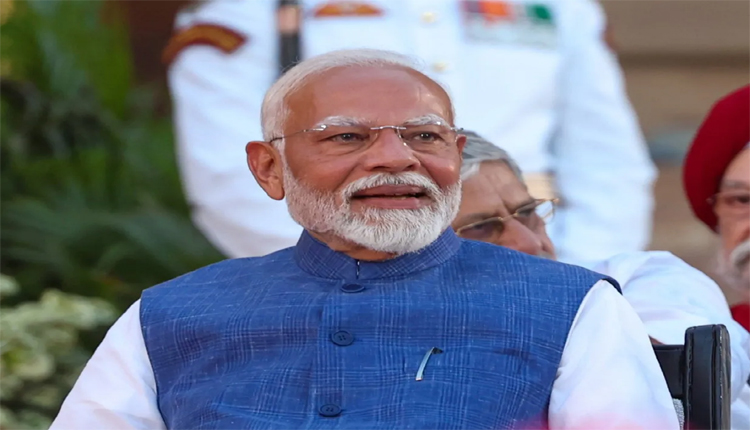
New Delhi: The Union Cabinet, chaired by Prime Minister Narendra Modi, has approved the continuation of the National Social Assistance Programme (NSAP) for the next five financial years, covering the period from 2026-27 to 2030-31. Backed by a substantial budgetary allocation of ₹53,428 crore, the welfare initiative is projected to benefit approximately 3.20 crore disadvantaged citizens across all 36 states and Union Territories.

A central highlight of the cabinet’s decision is the comprehensive rebranding of the social security framework. According to official announcements, the overarching NSAP will now be formally designated as the ‘Pradhan Mantri Samajik Sahayata Yojana’. In a significant shift, the ‘Indira Gandhi’ prefix attached to various sub-schemes has been dropped. Consequently, the individual programmes will now operate under new titles: the Pradhan Mantri Old Age Pension Scheme, Pradhan Mantri Widow Pension Scheme, Pradhan Mantri Divyangjan Pension Scheme, and the Pradhan Mantri Family Benefit Scheme.
While the old age, widow, and family benefit schemes will retain their current operational guidelines, the cabinet has introduced sweeping reforms to the disability pension criteria. To ensure compliance with the Rights of Persons with Disabilities Act, 2016, the disability benchmark required to claim benefits has been drastically reduced from the previous 80 per cent to 40 per cent. Furthermore, the minimum age restriction for the disability pension has been abolished, making the assistance applicable right from birth. The mandate also ensures that the disability assistance amount remains 25 per cent higher than comparable schemes in other categories.
Under the revised financial structure, beneficiaries of the Divyangjan scheme aged between 0 and 79 years will receive an assistance amount of ₹375, while those aged 80 years and above will receive ₹625. Government sources noted that detailed guidelines regarding the updated eligibility norms, beneficiary targets, and revised rates for persons with disabilities will be notified within three months.
Originally launched on August 15, 1995, to support families living below the poverty line, the continuation of the welfare programme ensures an unbroken social safety net for India’s most vulnerable demographic segments.