

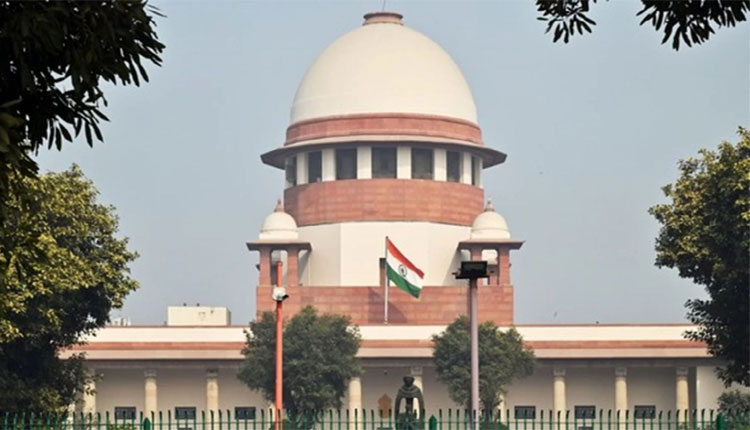
New Delhi: The Supreme Court has strongly reprimanded the Election Commission of India (ECI) after the poll body admitted that the original video recording of a disputed vote recounting process is missing. Hearing an election petition regarding Karnataka’s Sringeri assembly constituency, the apex court issued a stern ultimatum to the commission, warning that an “adverse inference” will be drawn if the crucial records are not produced by the next date of hearing.

The controversy stems from the 2023 Karnataka assembly elections, where Congress candidate T.D. Rajegowda defeated the Bharatiya Janata Party’s (BJP) D.N. Jeevaraj by a narrow margin of 201 votes. Following a petition by Jeevaraj alleging irregularities in the handling of postal ballots, the Karnataka High Court in April 2026 ordered a reverification of 279 rejected postal ballots alongside a recount of all postal votes.
However, the dispute escalated during the May recounting process. According to Rajegowda’s subsequent plea, the returning officer exceeded the High Court’s mandate by invalidating 255 postal ballots that were previously declared valid in his favour. This revised tally handed Jeevaraj a 52-vote lead, prompting officials to declare the BJP candidate the winner.
Taking up Rajegowda’s appeal on May 11, 2026, the Supreme Court stayed the recounting results and ordered the restoration of the original status quo, allowing the Congress leader to continue as the sitting MLA.
During the latest proceedings of this ongoing dispute, the Election Commission’s counsel informed the bench that the original video recording of the recounting process could not be located. An irked Supreme Court questioned how the primary constitutional body responsible for conducting elections could lose vital evidentiary records.
Dismissing the commission’s assurance that a search for the footage was underway, the bench noted that the preservation of electoral documents cannot be taken lightly. The court explicitly directed the Election Commission to present all available records at the next hearing, stressing that flimsy excuses for missing documents will not be tolerated in disputes where recounting footage serves as foundational evidence.