

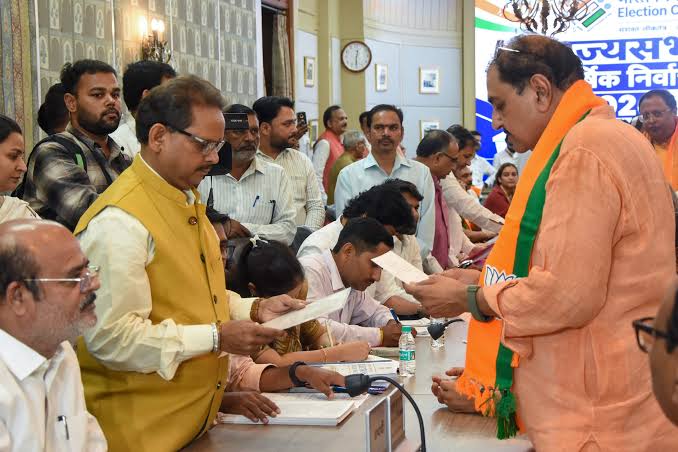
Lucknow: The biennial elections for the 10 Rajya Sabha seats in Uttar Pradesh concluded smoothly without a single vote being cast, as all ten candidates were elected unopposed on Friday. The final tally stands at eight seats for the ruling Bharatiya Janata Party (BJP) and two for the opposition Samajwadi Party (SP).

The necessity for a formal voting process was eliminated after the nomination papers of two independent candidates were rejected during the routine scrutiny process. Friday marked the final day for the withdrawal of nominations. With the 3:00 PM deadline lapsing and no valid candidates withdrawing from the race, the election authorities officially declared all ten contenders as uncontested winners.
The newly elected BJP members to the Upper House include Dharampal Singh, Radhakant Ojha, Prakash Pal, Vidyasagar Sonkar, Gopi Krishna Pandey, Priyanka Singh Rawat, Ram Pratap Singh Chauhan, and Shruti Gangwar. Representing the Samajwadi Party, seasoned politician Prof. Ram Gopal Yadav and Dhanraj Parimal Nathwani successfully secured their respective seats.
The tenure of the 10 outgoing Rajya Sabha members from Uttar Pradesh is scheduled to end on November 25. In a significant strategic shift this election cycle, the BJP opted to field entirely new faces, deciding against re-nominating any of its eight sitting members. Notably, high-profile figures such as Union Minister Hardeep Singh Puri and B.L. Verma were dropped from the state’s candidate list.
The BJP’s candidate selection highlighted a clear focus on social engineering and demographic representation ahead of upcoming political challenges. The party’s victorious list features two women and ensures targeted representation across diverse communities, including Other Backward Classes (OBC), Dalits, Brahmins, and Thakurs.
With the ruling NDA continuing to assert its dominance in the state legislature, the unopposed election reflects the current political arithmetic in the Uttar Pradesh Assembly, where both the BJP and the SP possessed the requisite numbers to easily ensure the victory of their respective candidates without forcing an electoral contest.