

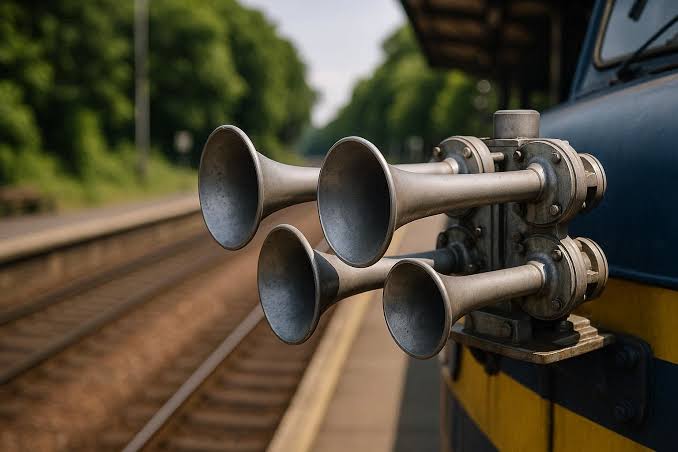
New Delhi: When standing on a bustling railway platform, the sharp blast of a train horn might seem like mere noise cutting through the chaos. However, for the Indian Railways, it is far from random. That sound is a vital, secret code facilitating communication between the loco pilot (driver) and the guard, ensuring the safe transit of millions of passengers every day.

Indian Railways utilizes a strict system of 11 distinct horn patterns. As one of the oldest and most reliable safety mechanisms in the network, these codes convey everything from a routine departure to a critical emergency. Loco pilots are rigorously trained to memorize and execute these signals flawlessly.
Here is a breakdown of what these essential codes mean:
-
One Short Horn: The train is heading to the yard for washing and servicing.
-
Two Short Horns: A signal to the guard asking for clearance to start the journey. For passengers, it means the train is ready to leave.
-
Three Short Horns: An emergency alert indicating the driver has lost control, prompting the guard to immediately pull the vacuum breaks.
-
Four Short Horns: Signals a technical snag; the train cannot move forward until repairs are made.
-
One Long and One Short Horn: The loco pilot is asking the guard to ensure the brake pipes are properly set before departure.
-
Two Long and Two Short Horns: A call for the guard to immediately come to the engine to coordinate with the driver.
-
Continuous Horn: A warning that the train is non-stop and will pass through the station without halting. Passengers must maintain a safe distance from the tracks.
-
Two Intermittent Horns: Alerts bystanders and commuters that the train is approaching a railway crossing.
-
Two Long and One Short Horn: Indicates the train is about to change tracks, alerting the cabin and signal staff.
-
Two Short and One Long Horn: Signals that a passenger has pulled the emergency chain or the guard has applied sudden brakes.
-
Six Short Horns: The most critical signal, denoting a major hazard or severe accident ahead.
While diesel engines produce a deep, resonating sound and electric engines emit a sharper tone, the coded messages remain identical. As Indian Railways rapidly modernizes with advanced anti-collision technologies like ‘Kavach’ (Automatic Train Protection), the frequency of these horns may decrease on newer routes. However, for the vast majority of the network, this century-old audio language remains the ultimate lifeline for railway safety.