

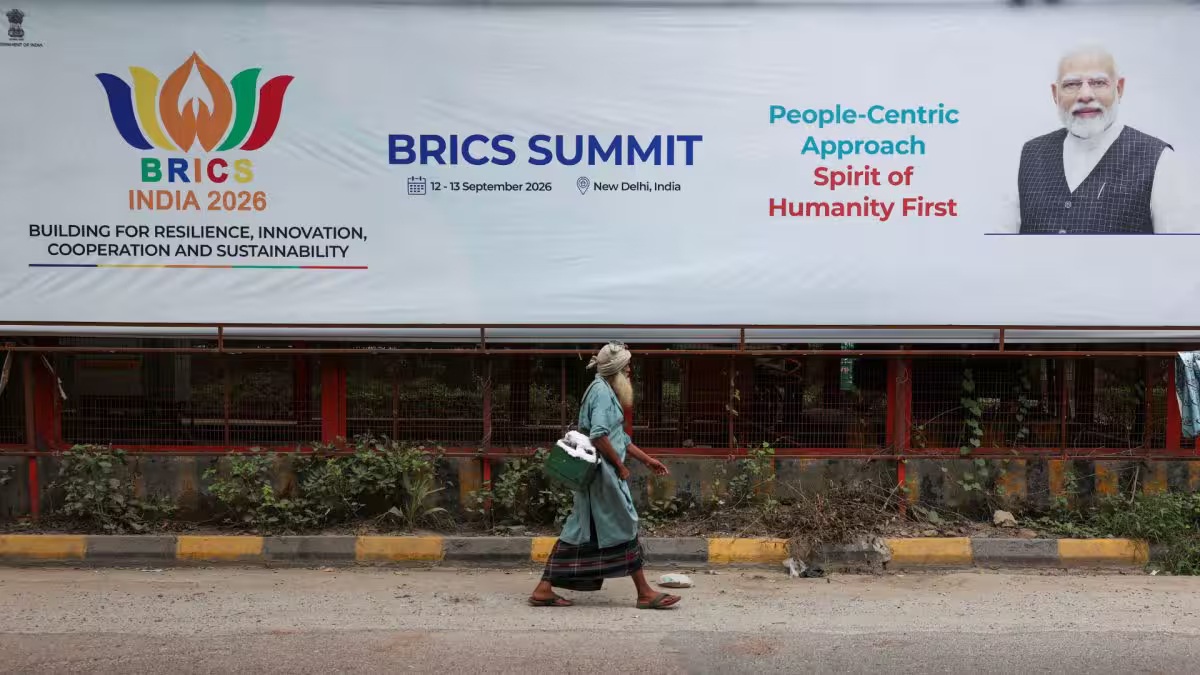
New Delhi: As preparations gather momentum for the crucial BRICS Summit scheduled for September 12-13 in New Delhi, former senior diplomats have cautioned India to remain vigilant against China’s strategic maneuvering. Experts warn that under the guise of “de-dollarization,” Beijing may attempt to establish the dominance of the Chinese Yuan, urging India to steer the bloc toward constructive economic cooperation instead.

Speaking on the geopolitical challenges and strategic opportunities facing the ten-member bloc, former senior diplomat Mahesh Sachdev highlighted the historical significance of the upcoming summit. Pointing out that BRICS is marking two decades since its inception in 2006, Sachdev expressed hope that the group will deliver more productive outcomes as it reaches maturity. He emphasised that a crucial element of this summit will be India’s position as a diplomatic bridge between BRICS and Western nations.
However, Sachdev issued a stark warning regarding proposed global financial reforms. “The world is tired of the US trying to re-impose its hegemony and wants multipolarity, but it will not replace the US with China,” he stated in an interaction with ANI. Noting that China currently accounts for two-thirds of the bloc’s total GDP and heavily influences its financial innovations, he added, “If we de-dollarize but bring the Yuan into that same space, the core structure will still serve the interests of a single nation. We risk replacing one hegemon with another.”
The summit comes against the backdrop of escalating global tensions, including the Russia-Ukraine conflict and the crisis in West Asia. While member nations like Russia and Iran might seek political backing for their respective geopolitical battles, experts suggest India must adopt a pragmatic approach.
Former senior diplomat Surendra Kumar advised that New Delhi should focus the multilateral event on tangible economic development, technology sharing, and sustainability rather than unresolved political disputes.
“India is trying to steer BRICS toward a stronger economic agenda, greater cooperation, and things that truly matter to the people, rather than getting entangled in political issues where unity is impossible,” Kumar remarked. Highlighting the bloc’s massive potential—comprising nearly half the global population and 40% of the world’s GDP based on purchasing power parity—Kumar stressed the need for practical action.
To counter currency dominance and drive genuine progress, Kumar suggested leveraging India’s Digital Public Infrastructure (DPI). He pointed out that India is successfully exporting its DPI model, having signed MoUs with 20 nations, with its Unified Payments Interface (UPI) now operational in 12 countries.
By championing digital infrastructure, boosting MSMEs, and supporting the World Trade Organization (WTO), India aims to ensure the New Delhi BRICS Summit remains an engine for global economic resilience rather than a platform for geopolitical posturing.