

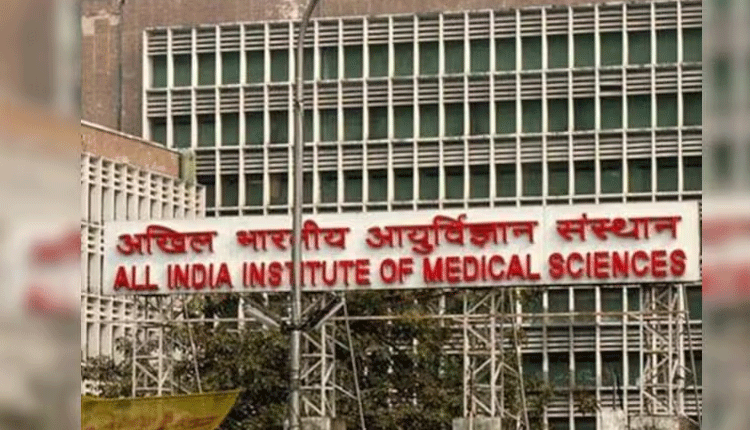
New Delhi: India’s premier medical institute, AIIMS Delhi, is grappling with a concerning trend as an increasing number of senior doctors opt to leave the hospital. With a continuously rising influx of patients, the departure of experienced faculty members and a high number of vacant posts have raised serious questions about the institution’s retention strategies and administrative challenges.

Recent data presented in Parliament highlights the severity of the issue. On July 31, 2025, Minister of State for Health Prataprao Jadhav informed the Lok Sabha that six doctors from AIIMS Delhi had taken Voluntary Retirement Scheme (VRS) citing personal reasons within that single year. While the minister maintained that resignations, VRS, and new recruitments are continuous processes, broader statistics reveal a deeper problem.
According to reports, a staggering 58 faculty members—comprising assistant, associate, and additional professors—left AIIMS Delhi between April 2018 and July 2025. Out of these, 11 doctors transferred to other AIIMS campuses, 10 joined other government institutions like IHBAS and PGI Chandigarh, and the remaining cited personal reasons for their departure.
The list of exits includes several prominent Heads of Departments (HODs) who left over the past eight years. Dr Rajesh Malhotra, HOD of Orthopedics, departed in June 2023 after 31 years of service. Neurology HOD Dr M V Padma resigned in October 2023 following a 30-year tenure. Surgical Oncology HOD Dr S V S Deo left in February 2024 after 29 years, and Cardiology HOD Dr Balram Bhargava resigned in April 2024 after serving for over 31 years. Additionally, CTVS HOD Dr Shiv Kumar Choudhary took VRS in 2024 after a 27-year stint.
Discussions with current and former doctors point to five major reasons driving this exodus. First, the lengthy paperwork involved in procurement, files, and tenders significantly consumes time that could be dedicated to patients and research. Second, limited promotional opportunities leave many doctors feeling their careers are stagnating, as top posts like HOD or Director are scarce. Third, internal politics and leadership issues, notably the appointment of a relatively junior doctor as Director in 2022, caused widespread resentment among senior faculty. Fourth, private hospitals offer lucrative alternatives with better salaries, modern facilities, reduced administrative pressure, and greater professional autonomy. Lastly, inadequate housing is a major deterrent; out of over 850 faculty members, only about 250 have been allotted campus accommodation in an expensive city like Delhi.
This faculty shortage is directly impacting patient care. Parliamentary committee reports indicate that out of the 1,306 sanctioned faculty posts, around 35 percent were vacant as of March 2026. Updated figures from July 2026 show that only 877 out of 1,313 approved posts are currently filled. Meanwhile, patient numbers continue to soar, with approximately 48.4 lakh OPD visits and 3.61 lakh admissions recorded in 2024-25. Recognising this widening gap, a parliamentary panel has urgently recommended timely recruitments and the introduction of retention incentives to keep experienced specialists at AIIMS, ensuring quality healthcare for the growing patient load.
Comments are closed.