

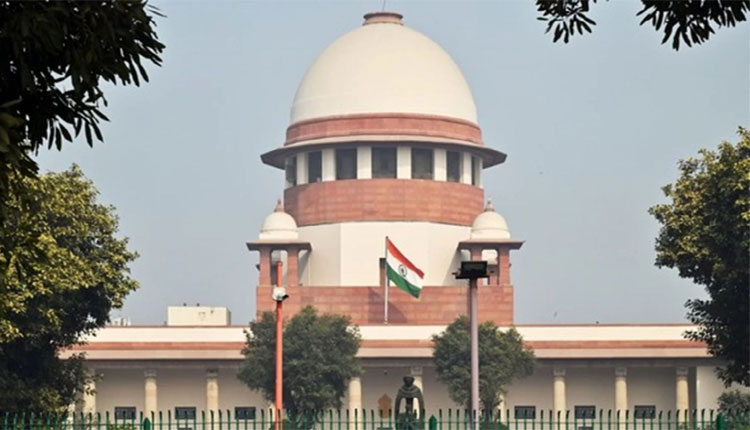
New Delhi: In a landmark judgment that significantly expands the scope of personal liberty and public safety, the Supreme Court has ruled that a citizen’s right to walk on a demarcated footpath is a fundamental right. A division bench comprising Justice PS Narasimha and Justice AS Chandurkar held that this right is primary and must take absolute precedence over the movement of motorized vehicles. The apex court noted that the right to walk is inextricably linked to daily life and forms an integral part of the freedom of movement and right to life guaranteed under Articles 19 and 21 of the Indian Constitution.

The historic declaration emerged from an tragic case involving the death of a five year old boy who was struck and killed by a speeding tanker while walking to school with his father. Highlighting the absence of a proper footpath or pedestrian crossing at the accident spot, the apex court observed that society has routinely reduced such human tragedies into mere police reports and insurance claims. Rectifying a lower court error, the bench enhanced the compensation awarded to the grieving family to 11.44 lakh rupees, directing payment within two months.
Delivering the judgment, the bench strongly criticized the growing elitism on Indian roads, where motorized transportation has dominated infrastructure and pushed walkers aside as if they are a nuisance. The court emphasized that human beings walked long before wheels were invented, and the primary right of movement precedes the privilege of operating vehicles. It further clarified that the Motor Vehicles Act of 1988 focuses heavily on the machine itself, leaving pedestrian safety treated as purely incidental.
This ruling imposes a strict and legally enforceable correlative duty on local administration across the country. The Supreme Court stated that if a road exists, authorities must ensure a well maintained footpath alongside it. The designated duty bearers include urban development authorities, municipal corporations, municipalities, and gram panchayats. Crucially, the bench declared that any violation of this pedestrian right will entitle citizens to seek constitutional and legal remedies for restitution and compensation, independent of standard motor accident claims.
Moving forward, the Supreme Court has directed its registry to forward the judgment to the central ministries of housing, rural development, and road transport to initiate a robust statutory framework. The apex court also recommended that the Law Commission of India examine the matter to establish a full time independent regulatory body. To ensure continuous monitoring, the top court has formally registered a separate proceeding titled “Re: Fundamental Right to Walk and Footpath” to overhaul pedestrian infrastructure nationwide.
Comments are closed.