

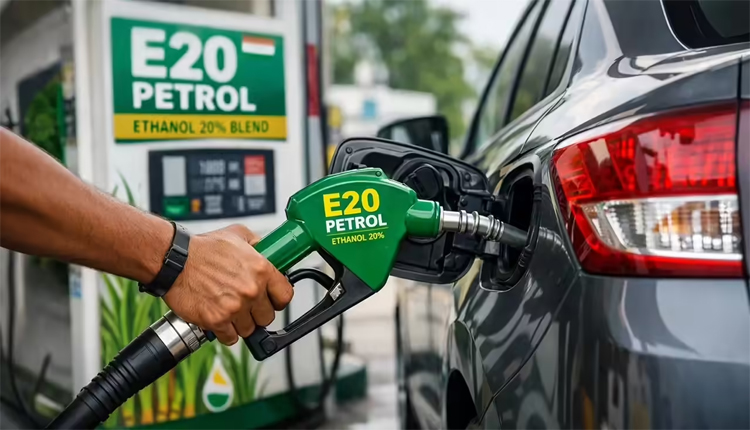
New Delhi: The Centre has announced a major policy move to promote higher ethanol blended petrol, exempting fuel with 22 per cent to 30 per cent ethanol content from central excise duty. The decision is expected to support India’s clean fuel push, reduce dependence on imported crude oil and open up fresh demand for the domestic ethanol industry.

According to the report, the exemption will apply to E22, E25, E27 and E30 fuel blends. These fuels will also be free from additional excise duty and road and infrastructure cess. The move comes after the government recently approved standards for petrol blended with up to 30 per cent ethanol, clearing the way for wider market rollout.
Under the notified structure, E22 will contain 78 per cent petrol and 22 per cent ethanol, while E30 will have 70 per cent petrol and 30 per cent ethanol. The exemption will be available only for blends that meet the Bureau of Indian Standards’ IS 19850 norms. The required duty on petrol and GST on ethanol must also be paid.
India has already achieved its target of blending 20 per cent ethanol in petrol ahead of schedule. The latest decision signals the government’s intent to move beyond E20 and prepare for a higher ethanol fuel economy. It also comes at a time when global crude oil markets remain vulnerable due to tensions in West Asia and concerns over supply routes such as the Strait of Hormuz.
The policy is expected to benefit consumers by creating scope for more affordable fuel options in the future. It may also help reduce India’s crude import bill, as a larger share of domestically produced ethanol will be used in transport fuel.
The agriculture sector is also likely to gain from the move. Ethanol production in India is linked to sugarcane as well as grain based distilleries. Industry players have been seeking higher blending opportunities, as only around half of the country’s ethanol production capacity is currently being used.
Higher ethanol demand could improve capacity utilisation in factories and increase sugarcane consumption, offering better income opportunities for farmers. The move is also expected to support lower carbon emissions from petrol use, adding an environmental dimension to the policy shift.
With the duty exemption now in place, the next focus will be on availability, pricing and consumer adoption of higher ethanol blended fuel at petrol pumps across the country.
Comments are closed.