

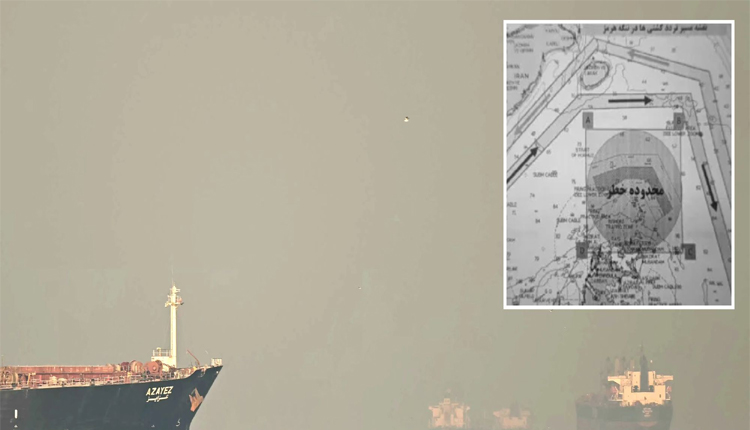
New Delhi: Even as guns fall silent in the Middle East, the Strait of Hormuz is far from returning to business as usual. Iran is now reportedly drawing up plans to levy a heavy toll on every ship passing through the strategic waterway — a move that could reshape global energy trade for years to come and deal a lasting blow to American credibility in the region.

According to reports, Iran intends to charge about ₹18.8 crore per vessel for passage through Hormuz to recover war-related losses. Around 138 tankers and ships transit the strait daily, carrying nearly 2 crore barrels of crude oil. Iran and Oman, which share jurisdiction over parts of the waterway, could collectively earn an estimated ₹2,482 crore per day. That amounts to ₹41,569 crore every month.
The revelation has sent Arab nations scrambling for alternatives. Israel has proposed a bold workaround: a new pipeline running from the Persian Gulf through Jordan to Haifa port. This would directly connect Arab oil producers to the Mediterranean and bypass both Hormuz and the Red Sea, where Houthi attacks have disrupted shipping lanes. Plans are also underway to expand Saudi Arabia’s existing 1,200-km East-West pipeline, which currently carries 70 lakh barrels per day, with capacity potentially doubling or tripling. New road and rail networks to supplement the oil supply are also being planned.
However, analysts caution that pipelines have inherent capacity limitations — a small tanker can carry 20 lakh barrels in a single voyage, while larger vessels can carry up to 30 lakh barrels — far outpacing what any land-based infrastructure can currently handle.
The broader geopolitical shift is equally significant. Arab nations, wary of Iran after sustained attacks during the conflict, are now gravitating closer to Israel. Israel could potentially emerge as an energy hub between the Arab world and Europe. Observers note that Trump’s ceasefire gamble may have ended the war but handed Iran a lucrative chokehold over the world’s most critical oil artery.
Comments are closed.