

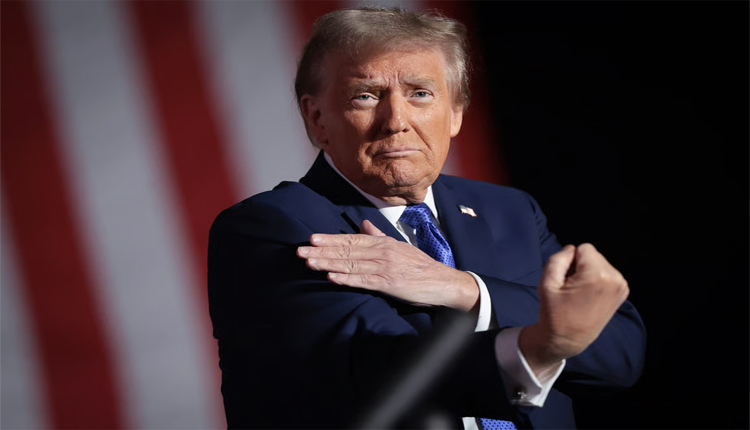
In a dramatic shift that could redefine the geopolitical landscape of the Middle East, United States President Donald Trump has announced a potential end to the ongoing conflict with Iran, setting a target date of April 9, 2026.

This announcement comes amid reports of a diplomatic breakthrough facilitated by an unlikely mediator: Pakistan.
President Trump revealed that Washington and Tehran have reached a preliminary understanding on nearly 15 key issues. Highlighting the progress, Trump stated, “This time Iran is truly serious; they want a deal. They want peace.” As a gesture of de-escalation, the US has committed to a five-day moratorium on strikes against Iranian energy infrastructure to determine if a comprehensive “Grand Bargain” is achievable.
The diplomatic heavy lifting appears to be shifting to South Asia. Following a high-level conversation between Pakistan’s Army Chief, General Asim Munir, and President Trump, Islamabad is reportedly preparing to host a landmark summit. Sources suggest that US Vice President JD Vance may lead the American delegation to Pakistan later this week to meet with senior Iranian officials.
While the Iranian Revolutionary Guard Corps (IRGC) remains skeptical, calling the US overtures a “distraction,” the White House confirms that representatives from Turkey, Egypt, and Pakistan have been actively consulting with US Envoy Steve Witkoff.
The ripple effects are already being felt globally. India’s External Affairs Minister, S Jaishankar, recently spoke with US Secretary of State Marco Rubio to discuss the conflict’s impact on energy security and the international economy. President Trump noted that a successful resolution would lead to a significant drop in global oil prices.
As the April 9 deadline approaches, the world watches Islamabad, where the next few days of arbitration could decide whether the Middle East moves toward a lasting truce or further volatility.
Comments are closed.