

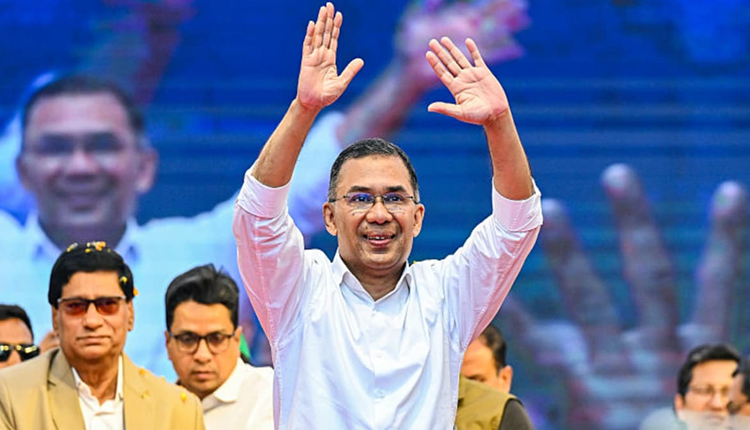
Dhaka: Following the August 2024 coup that ousted Prime Minister Sheikh Hasina, Bangladesh held its first general election, delivering a resounding victory for the Bangladesh Nationalist Party (BNP).

Although official results were still pending at the time of writing, reports indicate that under the leadership of Tarique Rahman, BNP secured a historic win, claiming well over a two-thirds majority in the 300-seat parliament.
The election took place shortly after the death of former Prime Minister Khaleda Zia. Her son, Tarique Rahman, who had lived in exile for 17 years, led the campaign and is now widely expected to become the next Prime Minister. BNP, one of Bangladesh’s oldest political parties, was founded in 1978 by former President Ziaur Rahman and later led successfully by his wife, Khaleda Zia. Tarique assumed command in December and quickly revitalised the party, filling the leadership vacuum left by his mother’s death and reigniting enthusiasm among workers and supporters.
With Sheikh Hasina’s Awami League banned from contesting (following the coup and her subsequent refuge in India), BNP faced no traditional rival. Instead, its main competitors were Jamaat-e-Islami and the newly-formed Nationalist Citizen Party (NCP), the youth-driven “Gen Z” party whose activists had spearheaded the 2024 uprising against Hasina. Yet Bangladeshi voters extended trust to neither Jamaat nor NCP. They placed their confidence squarely in BNP, a mainstream party viewed as capable of delivering stable, experienced governance.
Voting occurred on February 12.
Several factors contributed to BNP’s landslide success beyond the sympathy wave following Khaleda Zia’s passing:
The absence of Awami League created a massive electoral vacuum. Had Awami League participated — even without Hasina — it would likely have retained significant influence. Without it, established parties stepped in, and BNP emerged strongest. It reclaimed its traditional vote base while making substantial inroads into Awami League’s former supporters.
Jamaat-e-Islami, led by Shafiqur Rahman, failed to mount a serious challenge. Despite forming an alliance with NCP (the party born from the anti-Hasina movement), both partners suffered heavy defeats. Voters rejected Jamaat’s platform and organisation.
The Gen Z-led NCP similarly disappointed expectations. After the 2024 student-led movement elevated youth voices — many of whom joined the interim government under Muhammad Yunus and made headlines with strong statements (including anti-India rhetoric)— analysts anticipated a strong NCP showing. Instead, it collapsed at the polls. Key reasons include internal disunity, organisational weakness, marginalisation of women, lack of experienced leadership, and an overall perception that the party was immature and unready for national governance. Voters credited Gen Z with sparking change through protest but preferred a seasoned party to actually run the country.
In short, Bangladeshis prioritised stability, maturity, and proven governance over ideological novelty or religious appeals. Tarique Rahman’s BNP capitalised on this sentiment, positioning itself as the reliable choice in a post-uprising landscape.
Comments are closed.