

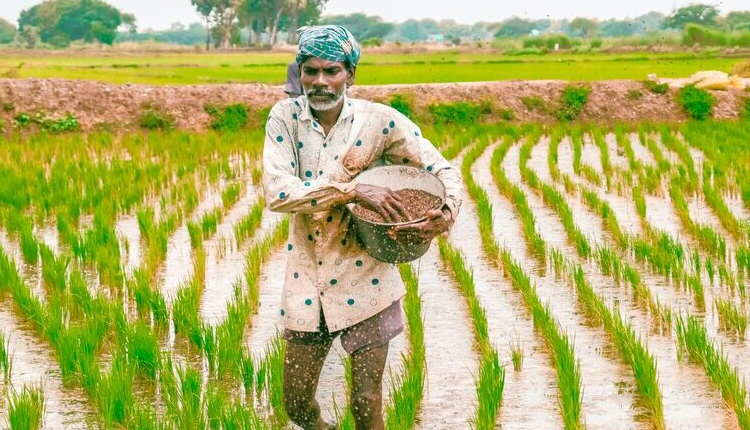
New Delhi: India has achieved a remarkable leap in agricultural exports, with the sector’s global share doubling over the past two decades, as acknowledged by the World Trade Organization (WTO) and highlighted in the Economic Survey 2025-26.

According to the survey, India’s share in world agricultural exports rose from 1.1% in 2000 to 2.2% by 2024, reflecting enhanced production capacity, quality improvements, and strategic market outreach.
In FY 2024–25, agricultural exports surged to USD 51.1 billion (approximately 4.25 lakh crore), up from USD 34.5 billion in FY20, registering a compound annual growth rate (CAGR) of 8.2%— outpacing overall merchandise export growth.
Key drivers include marine products (₹62,625 crore), non-basmati rice (₹55,408 crore), basmati rice (₹50,312 crore), spices (₹36,766 crore), buffalo meat (₹34,392 crore), and other agri items. Rice production recently surpassed China’s, bolstering India’s position as a top exporter.
The government is aggressively pursuing new markets through Free Trade Agreements (FTAs) with several nations, with deals already signed and negotiations ongoing. Despite untapped potential — given India’s vast production base — the survey stresses the need for stable export policies to avoid disruptions from ad hoc restrictions, which can harm supply chains and reputation.
Experts view this initiative as “low-hanging fruit” with immense scope, targeting USD 100 billion in combined agriculture, marine, and food exports in the coming years. This export boom not only strengthens farmer incomes but also cements India’s role as a reliable global supplier amid rising demand for Indian staples worldwide.
Comments are closed.