

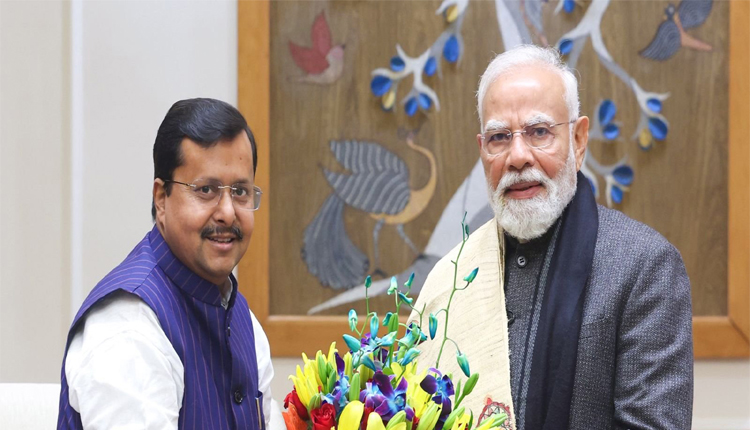
New Delhi: The Bharatiya Janata Party (BJP) has ushered in a new era with the appointment of 45-year-old Nitin Nabin as its national president, making him the youngest leader to helm the country’s largest political outfit.

Elected unopposed after the filing of requisite support proposals on January 19, Nabin’s elevation signals a deliberate push for generational change, aimed at energising the organisation and connecting with younger voters, particularly Gen Z.
Prime Minister Narendra Modi, who attended the ceremony alongside senior leaders like Home Minister Amit Shah, congratulated Nabin, praising his organisational skills and administrative experience.
The move follows his stint as national working president since December 2025, during which he toured states like Tamil Nadu, Puducherry, and Assam to gauge ground realities.
Yet, the road ahead is far from smooth. Nabin inherits a party in power at the Centre for over a decade, where maintaining a distinct organisational identity separate from government machinery remains a delicate task. Internally, he faces the challenge of balancing seasoned leaders from older generations with the induction of fresh, young faces into key roles such as national secretaries, general secretaries, and heads of frontal organisations.
The bigger test lies in the upcoming assembly elections in several states. While Assam and Puducherry have NDA governments that need careful management, the BJP’s presence is weak in Tamil Nadu and Kerala, where building a strong electoral machinery will demand bold decisions. West Bengal poses the toughest challenge, with fierce Opposition dominance making victory an uphill battle.
Analysts point out that Nabin’s leadership will be judged by how effectively he navigates these tricky contests and revitalises the party organisation without disrupting its core ideological strength.
As Nabin steps into the role, all eyes are on whether this youth-focused shift can translate into renewed momentum for the BJP amid evolving political dynamics.
Comments are closed.