

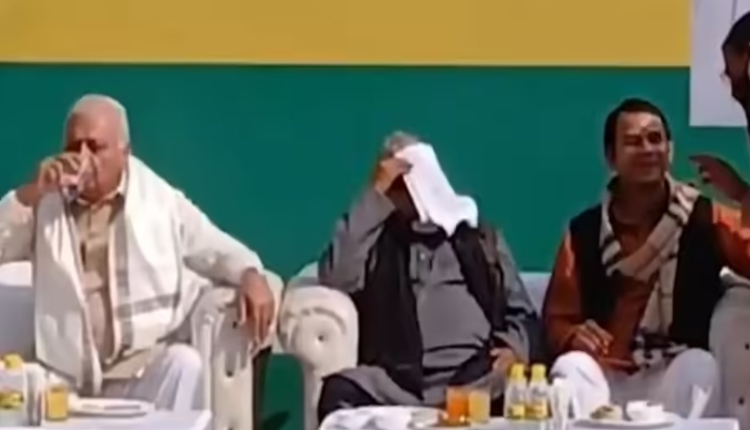
Patna: In Bihar, Makar Sankranti is more than a harvest festival — it’s a high-stakes political theatre where Dahi-Chura Bhoj (curd and flattened rice feast) serves as a subtle barometer for alliances, rivalries, and power shifts.

The simple dish of dahi mixed with chura, often sweetened with jaggery and garnished with fruits or nuts, symbolises simplicity, unity, and community. Yet, over decades, it has evolved into a strategic platform for politicians to signal intentions through invitations, attendance, and personal gestures.
The tradition gained political momentum in the 1990s when former Chief Minister Lalu Prasad Yadav began hosting grand Dahi-Chura events at his residence, personally serving guests to bridge leaders and the masses. Since then, these bhojs have foreshadowed major developments — from coalition formations to dramatic breaks.
Notable instances include the 2017 event at Rabri Devi’s home, where Nitish Kumar received a curd tilak from Lalu, hinting at the short-lived Mahagathbandhan unity before Nitish rejoined the NDA. In 2015, pre-election feasts hinted at Nitish’s switch to the Opposition alliance, paving the way for victory.
This year, the spotlight is on Tej Pratap Yadav, who hosted a high-profile Dahi-Chura Bhoj at his Patna residence. The event saw a rare family reunion with estranged father Lalu Prasad Yadav, brother Tejashwi Yadav, Bihar Governor Arif Mohammad Khan, Deputy CM Vijay Kumar Sinha, and other key figures from both ruling and Opposition camps. Speculation is rife about new political equations, with leaders like Pashupati Kumar Paras hinting at “a new turn” in Bihar politics.
Even absences matter — like Congress MLAs skipping their party’s event, fuelling rift rumours. In Bihar’s flavourful politics, a humble plate of dahi-chura often reveals more than speeches ever could.
Comments are closed.