

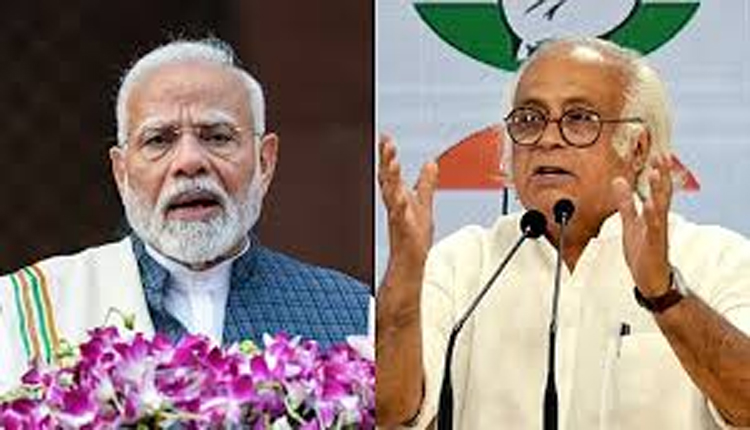
New Delhi: The passage of the Sustainable Harnessing and Advancement of Nuclear Energy for Transforming India (SHANTI) Bill, 2025, has ignited a fierce political row, with Congress leader Jairam Ramesh accusing Prime Minister Narendra Modi of rushing the legislation through Parliament to appease US President Donald Trump and align with American interests on nuclear liability.

Passed by voice vote in both Lok Sabha and Rajya Sabha this week, the bill overhauls India’s nuclear framework by repealing the Atomic Energy Act, 1962, and the Civil Liability for Nuclear Damage Act, 2010.
It opens civil nuclear operations to private companies for the first time, empowers the Atomic Energy Regulatory Board with statutory status for stricter safety enforcement, and modifies liability rules by removing supplier accountability while capping operator risks to attract investment.
The government hails it as a transformative step towards achieving 100 GW of nuclear capacity by 2047, reducing fossil fuel dependence, and boosting clean energy.
However, Ramesh slammed the move as a “bulldoze” tactic, claiming it breaches the unanimous 2010 parliamentary consensus on supplier liability. Linking the timing to Trump’s recent signing of the US National Defence Authorisation Act (NDAA) for Fiscal Year 2026 – which on page 1912 calls for joint India-US assessments on nuclear liability – Ramesh quipped that the SHANTI Bill was meant “to restore SHANTI with his old good friend.” He dubbed it the “TRUMP Act – The Reactor Use and Management Promise Act”.
The Opposition decried the lack of debate and rejection of referrals to a parliamentary committee, warning of compromised safety and national interests. As India pushes for nuclear expansion, the controversy underscores tensions between energy ambitions and accountability.
Comments are closed.